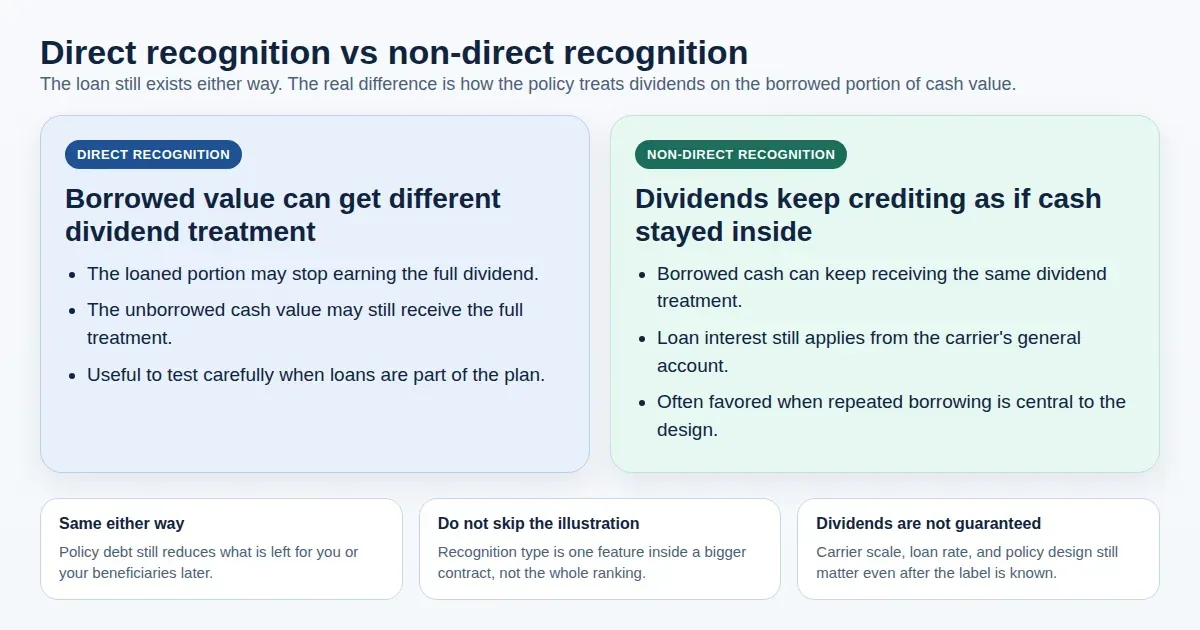
Whole Life Surrender Charges Explained: Why Early Exit Costs More Than Buyers Expect
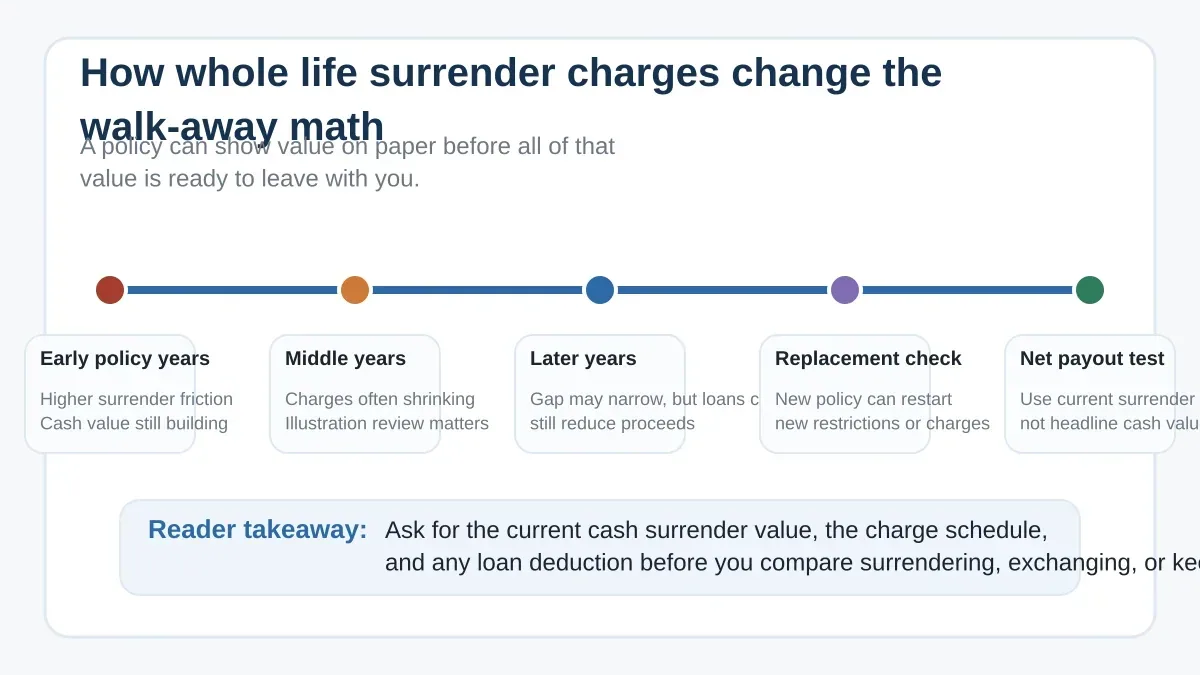
If you are thinking about canceling a policy, taking the cash, or replacing one contract with another, whole life surrender charges deserve a closer look than they usually get.
Most buyers hear about surrender charges as if they are just one more line item in a long policy packet. In practice, they can change the amount you actually walk away with, change how attractive a replacement offer really is, and change whether "cashing out" feels smart once the numbers are on paper.
That is why this topic matters even for people who are not planning to surrender a policy today. The earlier you understand where surrender charges show up, the easier it is to read illustrations, compare replacement offers, and separate policy value on paper from money that is truly available to you now.
The good news is that this does not need to be mysterious. The NAIC Life Insurance Buyer's Guide, the Washington state Office of the Insurance Commissioner life insurance guide, and IRS Publication 554 give readers a practical framework: check the current illustration, compare the real surrender value instead of the headline value, and slow down before dropping one policy for another.
This article is general education only, not personal tax, legal, or suitability advice. Policy forms vary, state replacement rules vary, and your own contract still controls. But if you want a calm way to review surrender charges before you make a permanent move, start here.
Why surrender charges matter before you cash out
Surrender charges matter because the question is almost never just "Does this policy have value?"
The real question is closer to this: How much of that value can I actually access today, and what do I give up by walking away from the contract now instead of later?
That difference is easy to miss when a policyowner focuses only on a cash value number from a statement or sales conversation. The NAIC guide notes that some cash-value policies build low values in the early years and stronger values later on, which is one reason a year-by-year display matters. The same guide also warns that replacing a policy may be costly because much of what you paid in the early years went toward the insurer's selling and issuing costs, and you may pay that type of cost again if you buy a new policy.
That is the hidden trap in a lot of replacement conversations. A new policy can still be better. A surrender can still be appropriate. But if you do not account for the exit friction on the current contract, it is easy to compare a real current loss against an optimistic future promise.
The decision is rarely just "keep it or cancel it." Timing, replacement resets, and existing policy debt can all change the net result.
In other words, surrender charges are not just a fee issue. They are a decision-quality issue. They force you to ask whether the reason for leaving is strong enough to justify the cost of leaving now.
Where surrender charges show up in a whole life policy review
One of the smartest pieces of consumer guidance on this topic is simple: ask for the current illustration before you act.
The NAIC guide says that before replacing a policy, you should ask your current insurer or agent for an updated illustration and check how the policy has performed and what you might reasonably expect next. The Washington guide explains why that matters: an illustration is a ledger that shows how the policy should perform under stated assumptions, including what the company actually guarantees and what may change if non-guaranteed elements do not perform as hoped.
That makes the illustration one of the first places to look for surrender-charge context.
Depending on the contract and carrier, the exact labels may vary, but readers usually want to find:
- the current cash value
- the current cash surrender value
- any year-by-year value table
- policy-loan balances, if any
- language showing how long surrender charges or similar early-exit deductions still matter
If the illustration is hard to read, that is not a reason to skip it. It is a reason to slow the conversation down and ask someone to explain the line items in plain language.
The main point is not to memorize a template. It is to compare the policy's current exit value with the story you are being told about why you should surrender, exchange, or replace it.
Why cash value and cash surrender value are not the same number
This is where many misunderstandings begin.
When people say, "My policy has cash value," they often mean the policy has accumulated value inside the contract. That does not always mean the same dollar amount is ready to be paid out if the policy is surrendered today.
The difference shows up in the wording itself. "Cash value" and "cash surrender value" are related, but they are not interchangeable decision terms.
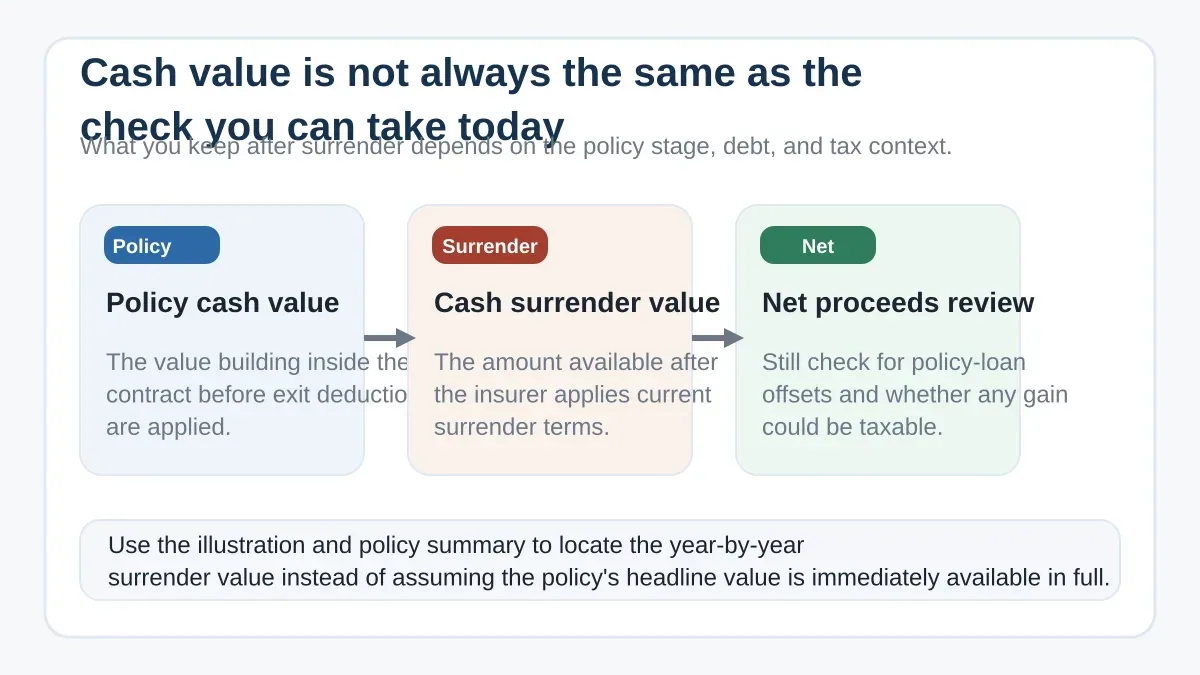 A policy can look healthy at the cash-value line while still producing a smaller walk-away number after current surrender terms and other deductions are reviewed.
The Washington consumer guide warns readers that replacement policies may include important new surrender penalties and defines a surrender penalty as a financial penalty for canceling a policy or contract early. That definition is helpful because it frames the issue correctly: early exit can have a cost even when the policy has built value.
The NAIC guide adds another useful reminder: some policies show relatively low values early and stronger values later, so a year-by-year value display is important. A hypothetical whole life cash value chart is a simplified example of that year-by-year shape. That is why two policyowners can both say, "I have cash value," while facing very different surrender decisions depending on policy age, design, and funding history.
A practical way to think about it is:
- cash value tells you there is value inside the contract
- cash surrender value tells you what is currently available if you exit under the policy's terms
- net proceeds after review may be smaller still once loans, taxes, or replacement costs enter the picture
That last bullet is where disciplined policy review beats guesswork.
How taxes, policy loans, and replacement decisions change the payout
Surrender charges are only one part of the walk-away math.
The Washington guide says that if you borrow against policy cash value and do not repay the loan and interest, the insurer subtracts what you owe from the death benefit or from the cash value you receive if the policy is canceled. So even before taxes enter the picture, policy debt can reduce the amount you actually receive.
Then there is the tax side. IRS Publication 554 says that if you surrender a life insurance policy for cash, you must include in income any proceeds above the cost of the policy. The IRS also says that your cost or investment in the contract is generally the premiums you paid, less refunded premiums, rebates, dividends, or unrepaid loans that were not already included in income. If there is taxable income, the publication says you should receive a Form 1099-R showing the total proceeds and taxable amount.
That does not mean every surrender creates a tax problem. It means the tax review should happen before you act, not after.
Replacement decisions raise a second layer of caution. The Washington guide warns that a replacement policy may come with new restrictions, a new two-year suicide clause, and new surrender penalties. It also says that if an agent suggests exchanging one policy for another, you should ask for a written comparison of the old and new policy before agreeing to the transaction.
That is excellent advice because it turns vague sales language into something you can inspect line by line.
If the conversation is really about whether to replace or surrender the policy, this is also the point where Top Whole Life's guide on how to cancel a whole life insurance policy can help you compare surrender, reduce-pay-up, and other exit paths in the same workflow.
Questions to ask before you surrender or exchange a policy
Before you sign anything, ask questions that force the current numbers onto the table.
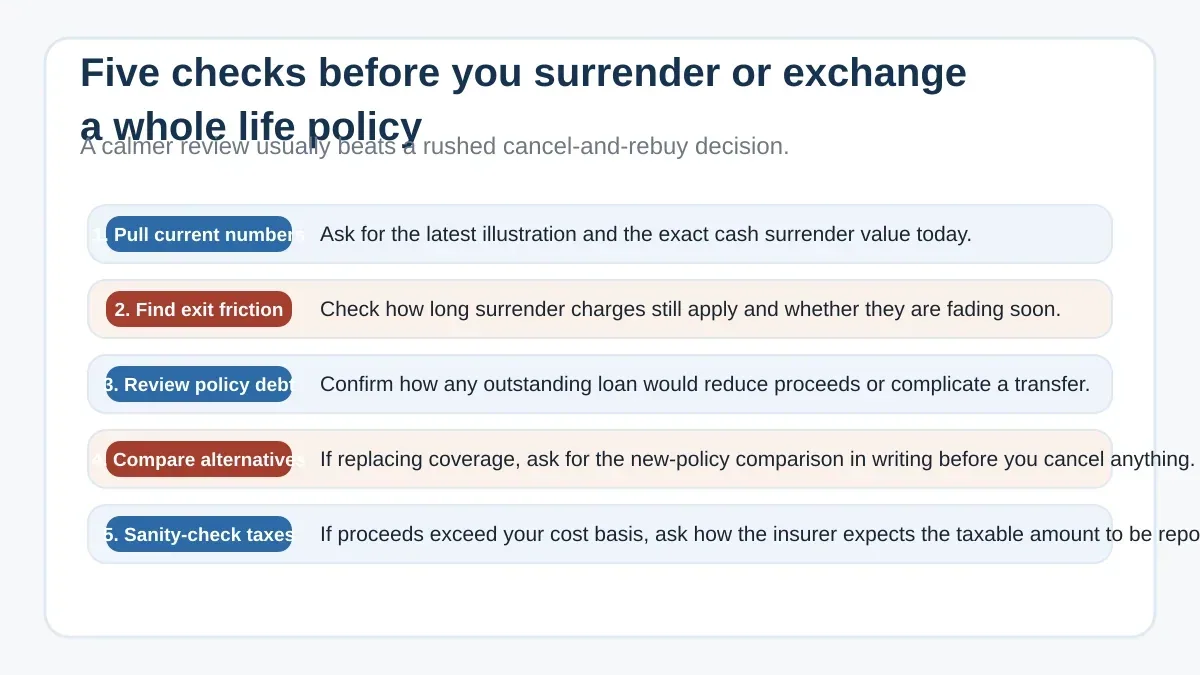 A good review turns a vague exit decision into a checklist with current values, written comparisons, and fewer surprises.
Here is a practical short list:
-
What is the exact cash surrender value today, not just the cash value?
Ask for the number that reflects what is currently available under the policy's terms. -
How long do surrender charges still matter on this contract?
Even if the answer is "they are already low," you want that answer tied to the actual policy year, not memory. -
Is there any outstanding policy loan or accrued interest reducing the proceeds?
If there is, ask for the net effect in writing. -
If I replace this policy, what restrictions or charges restart on the new one?
Washington's guide is especially useful here because it reminds buyers that new surrender penalties and other restrictions can reappear on a replacement policy. -
Can I see a written comparison of the current policy and the proposed new one?
If the proposed solution is a replacement, do not settle for verbal reassurance. -
Has anyone reviewed whether surrendering the policy could create taxable income?
IRS Publication 554 is clear that gains above cost can be taxable. -
Do I really need to surrender, or do I need a different adjustment?
In some cases, the better answer is to review, reduce, or redesign rather than exit.
Those questions do not make you difficult. They make the decision cleaner.
When waiting or adjusting the policy may be smarter
One of the most useful lines in the NAIC guide is that if your current policy no longer meets your needs, you may not have to replace it. You may be able to change it or add to it instead.
That is a simple sentence, but it can save people from rushed decisions.
Waiting or adjusting may be the smarter move when:
- you still do not have an updated illustration
- the surrender-charge period is still doing real damage to the payout
- a policy loan makes the walk-away amount smaller than expected
- the replacement offer has not been compared in writing
- the new policy would restart restrictions or costs that are being ignored in the sales pitch
- you are feeling pressure to act before the numbers are fully explained
Sometimes the best next step is not "surrender now." Sometimes it is "review the current contract, compare the real alternatives, and move only when the reason is clear enough to justify the cost."
If your goal is simply to understand the existing policy better before changing it, Top Whole Life's guide to the whole life insurance annual statement is a useful companion read. If your real question is whether a new policy design would genuinely improve your position, a fresh single whole life quote can be more useful than a rushed surrender conversation.
The big takeaway is that surrender charges are not a side note. They are one of the clearest signals that you should compare what the policy is worth, what it is worth to exit today, and what it would cost to start over somewhere else.
This article is general education only. Confirm current surrender value, policy-loan treatment, replacement restrictions, and any tax implications with your insurer and your own tax professional before you cancel, surrender, or exchange a policy.