Whole Life Insurance for Kids (2026)

2026 verdict: A healthy working parent should be insured before a child is. Whole life on a kid is a small, optional lock-in of insurability and a modest cash-value side account — not a college fund and not a substitute for income replacement on you.
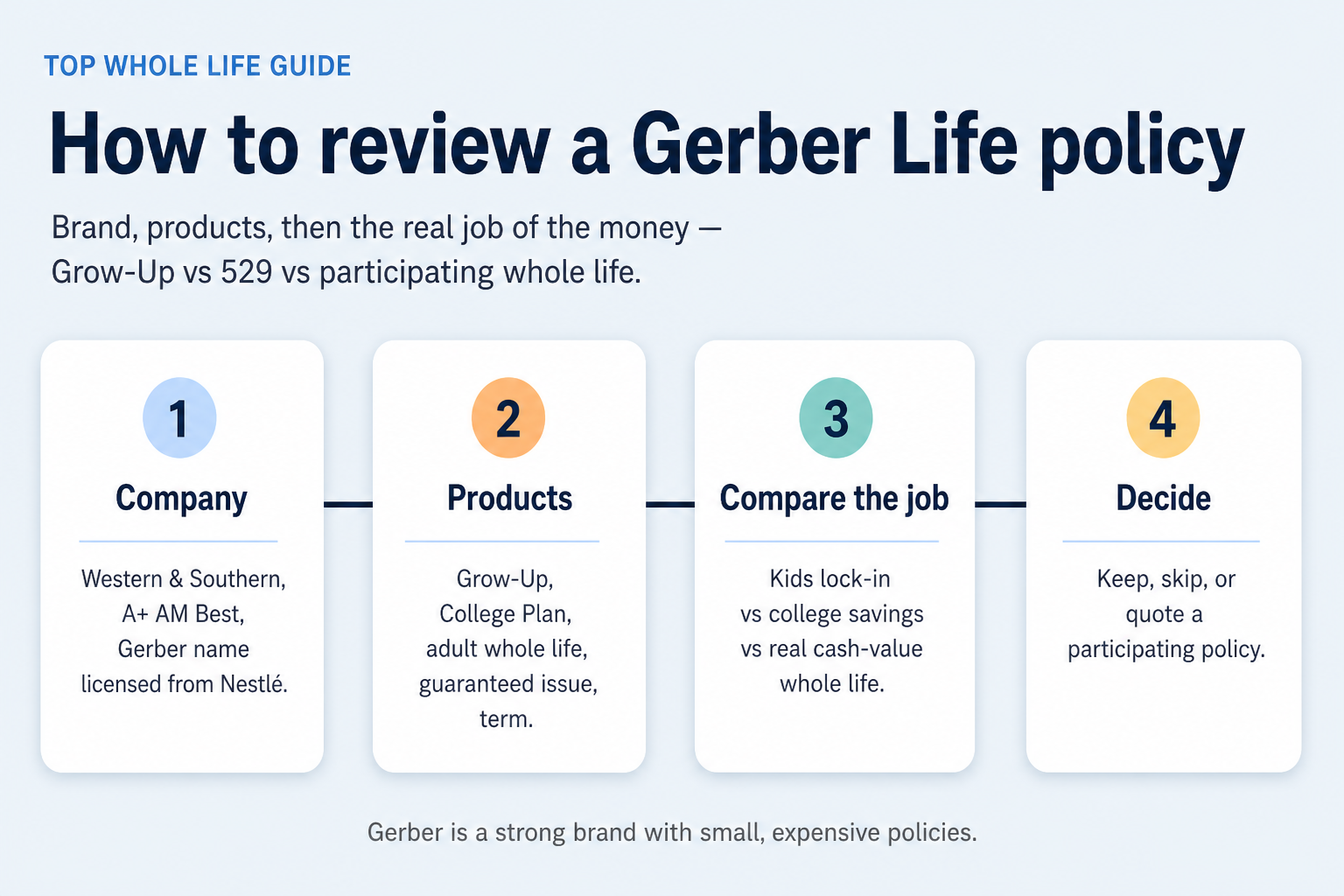
TV ads (especially Grow-Up) reverse that order. This page is the category hub: should you put permanent insurance on a child at all, and in which form? Brand-specific Grow-Up / College Plan details live in our Gerber whole life insurance review.

Who kids whole life is for — and who should skip it
It can be a fit if:
- The parent (or grandparent who supports the household) already has enough term or participating whole life.
- You want a modest permanent face amount on a child who might not be insurable later (family health history, a condition that could appear in the teens).
- You will actually keep the policy in force. A lapsed juvenile policy is an expensive lesson.
Skip it — or buy something else — if:
- You are uninsured or underinsured and the “kids policy” premium would have paid for coverage on you.
- The pitch is “this is how we save for college.” Use a 529 (and term on the parent). See the college section in the Gerber review.
- You want $250,000+ of cash-value whole life. That is an adult participating policy, not a juvenile simplified product. Start with top whole life companies for cash value.
New to whole life as a product? Read whole life insurance for beginners first, then come back to the table below.
Parent term vs child rider vs kids whole life vs Grow-Up
| Option | What it does | Typical size | Cash value | Best when |
|---|---|---|---|---|
| Term or participating WL on the parent | Replaces income if the adult dies | Hundreds of thousands to millions | Term: none. Participating WL: yes | Almost always first |
| Child rider on the parent’s term/WL | Small death benefit on each child, cheap | Often $5k–$25k per child | Usually none / tiny | You want a token amount and simplicity |
| Participating whole life on the child | Permanent coverage you can design (PUAs, dividends) at a mutual | Whatever you fund; still usually smaller than adult policies | Yes, if funded | Insurability lock + real cash value, after the parent is covered |
| Grow-Up / simplified juvenile WL | Direct-to-consumer small whole life; face amount often doubles at 18 | Gerber Grow-Up: $5k–$50k (doubles at 18) | Modest | Narrow: small lock-in, or a child who may not underwrite later |
A child rider is not “whole life for kids.” It is cheap extra death benefit hanging off your policy. If the parent’s term expires and you drop it, the rider usually dies with it.
Standalone kids whole life at a mutual is a different job: a contract the child can own later, with cash value you can actually design. Grow-Up-style products are simplified, small, and sold on brand. They are not the same as MassMutual / Penn Mutual / Guardian juvenile design.
Is whole life insurance for kids a scam?
No. Licensed insurers pay claims on in-force juvenile whole life. The disappointment is almost always the job the ad implied: college savings, “investment,” or “the only coverage the family needs.”
What is a bad purchase:
- Paying $35 a month for $50,000 on the baby while the parent has $0 of income replacement.
- Treating Grow-Up cash value as a 529.
- Buying a seventh overlapping Gerber article’s worth of coverage instead of reading one honest review — use the Gerber whole life insurance review for Grow-Up, College Plan vs 529, guaranteed issue, and sample costs.
If someone on Reddit says “never insure a child,” they are usually right about priority. They are not right that every juvenile policy is fraud.
What a child policy actually includes
Most true whole life on a child still has the usual chassis:
- Level premium (priced at the child’s age).
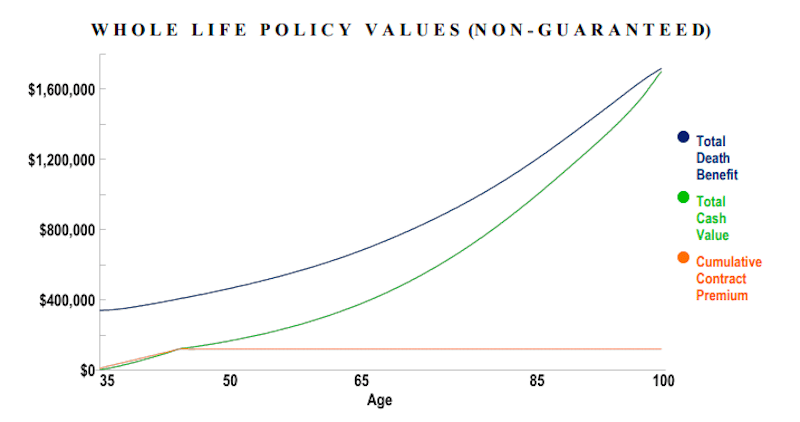
- Guaranteed cash value schedule (small at first).
- A death benefit that stays in force if premiums are paid.
- Often a guaranteed purchase option so the child can buy more coverage later without a new exam — this is the feature that justifies the product when family health history is the worry.
It does not automatically teach a toddler financial responsibility. That line is marketing. The adult who pays the premium is the one learning the lesson.
If you already bought a Grow-Up Plan
Do not guess from the original folder. Get the in-force illustration and cash-surrender value, then use the keep / surrender / replace order in the Gerber review. Healthy adults who inherited a tiny juvenile policy often surrender it; children who later cannot underwrite should keep it and calendar the purchase-option windows.
Next step
- Price term or participating whole life on the parent if that is still open — free whole life quote.
- If the parent is covered and you still want something on the child, decide rider vs participating kids WL vs a small simplified plan using the table above.
- If the brand on the kitchen table is Gerber, stop on this hub and finish on the Gerber whole life insurance review.
Should I get whole life insurance for my child?
Only after you are insured. Then yes if you want a modest permanent amount and insurability lock, and you will keep paying. No if the premium is stealing from parent coverage or you think it is a college plan.
Is a child rider better than a separate kids policy?
Usually, if you only want a small death benefit and simplicity. A separate participating policy is better if you want cash value and a contract the child can own for decades. Grow-Up sits in between: real whole life, weak as a savings or college vehicle.
Does whole life for kids build cash value?
Yes, on a true whole life contract — slowly at first. Simplified juvenile products (including Grow-Up) build modest cash value. If cash value is the reason you are shopping, an adult participating policy on the parent, or a properly designed kids policy at a mutual, does more work than a TV-ad face amount. Compare carriers on our cash-value company list.