Which Policy Type Builds Cash Value

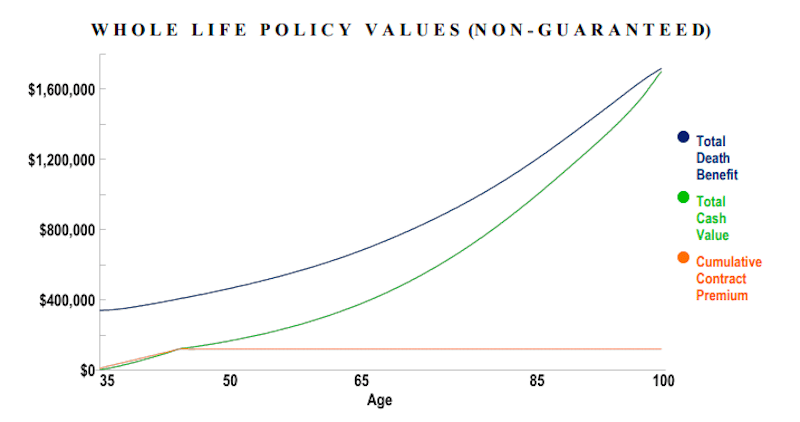
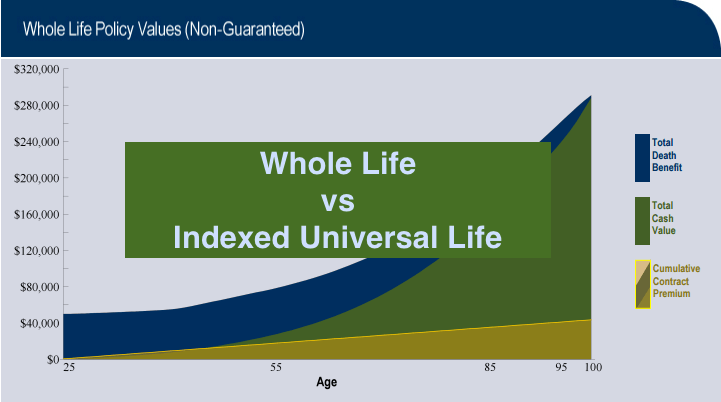
You cannot “maximize cash value” on the wrong chassis. Term has none. Guaranteed universal life (GUL) is built to keep a death benefit cheap, not to accumulate. Indexed universal life can build cash value if you overfund it — and it can implode if you do not. Participating whole life is the product we actually design when cash value is the job.
This page is policy type. For paid-up additions, MEC limits, and loan treatment after you already chose whole life, read how to maximize whole life cash value. For which mutuals we illustrate, use the top whole life companies for cash value.
Policy types at a glance
| Type | Cash value? | What it is good at | Skip it when… |
|---|---|---|---|
| Participating whole life | Yes — guaranteed + dividends | Lifetime coverage, PUA design, predictable outlay | You only need 20-year income replacement |
| Indexed UL (IUL) | Maybe — depends on funding and caps | Flexible premium, index-linked credits with a floor | You will pay the minimum and hope the cap stays high |
| Guaranteed UL | Little / none by design | Cheap permanent death benefit to a target age | You wanted a savings account inside the policy |
| Term | No | Income replacement for a set period | You need cash value or lifetime coverage |
If the sales pitch is “this IUL illustrates 6–7% every year,” read whole life vs IUL before you sign. The illustration is not a forecast.
Start with participating whole life if cash value is the job
Whole life from a mutual company combines a guaranteed cash-value schedule with the option to buy paid-up additions. Premiums are level. The contract does not reprice the cost of insurance every year the way UL does.
That is why “maximize cash value” on this site usually means: pick a cash-value mutual, then fund PUAs — not “buy IUL because the index looks high this year.”
Whole life is the wrong tool if you only need a 20- or 30-year death benefit and you will invest the difference. In that case buy term and invest outside the policy. Do not force a cash-value product onto a term job.
When IUL is the cash-value chassis (and when it is not)
IUL can accumulate if:
- You fund well above the minimum premium.
- You understand the cap, participation rate, and floor can change.
- You accept that cost of insurance rises with age, so a skinny-funded policy can implode.
IUL is a poor maximize-cash-value default if the agent showed you the illustrated rate at the lowest allowable premium. That design optimizes commission and a pretty ledger, not cash value you can borrow against in year 15.
If you already own IUL and the question is funding, that is a separate illustration review — not a whole-life PUA checklist. Bring the in-force to a quote conversation and we will say whether to keep, 1035, or replace.
GUL and term: do not expect a savings engine
GUL is permanent coverage engineered to hit a no-lapse age with as little premium as possible. Cash value is not the point. Using GUL as a “cash value maximize” product is a category error.
Term has no cash value. A term rider on a whole life policy is a blend, not a way to juice the savings component. If you need more death benefit cheaply, term (or a term rider) is honest. If you need cash value, raise PUA on whole life instead of stacking term and calling it growth.
After you pick the type
Once the chassis is participating whole life:
- Set face amount from the need (income, buy-sell, estate), not from “how much cash value do I want in year 10.”
- Fund PUAs to the MEC line if accumulation is the secondary job — details on the mechanics page.
- Leave the dividend option on paid-up additions.
- Review loans annually.
Skip the generic listicles that tell every product type to “pay on time and overfund.” Paying on time matters. Overfunding an IUL minimum, a GUL, or a term policy does not create whole-life cash value.
Get a whole life quote if you want the chassis designed as participating whole life, not a blended illustration that hides the type.