Opening an Indexed Universal Life Insurance Account: A Step-by-Step Guide

An indexed universal life account is a permanent policy whose cash value can be credited interest based on an index, usually the S&P 500 price return. You are not buying shares. A down year does not create a debt you owe the insurer. It also does not freeze the cash value.
The floor applies to the index credit. Cost of insurance and other charges still come out. If charges are larger than the premium you pay and the interest credited, cash value falls, and the policy can lapse.
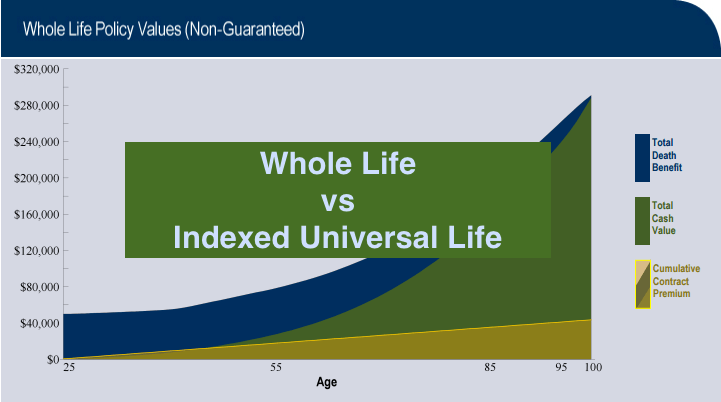
The side-by-side with whole life, including a cap-and-floor calculator, is on whole life vs indexed universal life. Costs are on indexed universal life cost.
What the account actually credits
| Piece | What it does | What people get wrong |
|---|---|---|
| Floor | Minimum index credit for that segment. Often 0%. Some policies use 1%. | A 0% floor means a down index year credits nothing. It does not mean cash value cannot fall. |
| Cap | Maximum index credit for that segment. New S&P 500 annual point-to-point caps are often about 9–12%. | The insurer can lower the cap after issue. A 20% index year does not credit 20% if the cap is 10%. |
| Participation | Share of the index move before the cap. Capped S&P accounts are often 100%. | Uncapped accounts often use a lower participation rate instead of a hard cap. |
| Charges | Cost of insurance, premium loads, and policy fees. COI generally rises as you age. | These are deducted even in a 0% credit year. |
Example. The index is down 15% and your floor is 0%. The index credit is $0. You do not owe the 15%. If policy charges that year are $1,800 and you paid $1,200 of premium, cash value can still drop by about the difference. Run the numbers on your illustration’s guaranteed and midpoint columns, not only the illustrated rate.
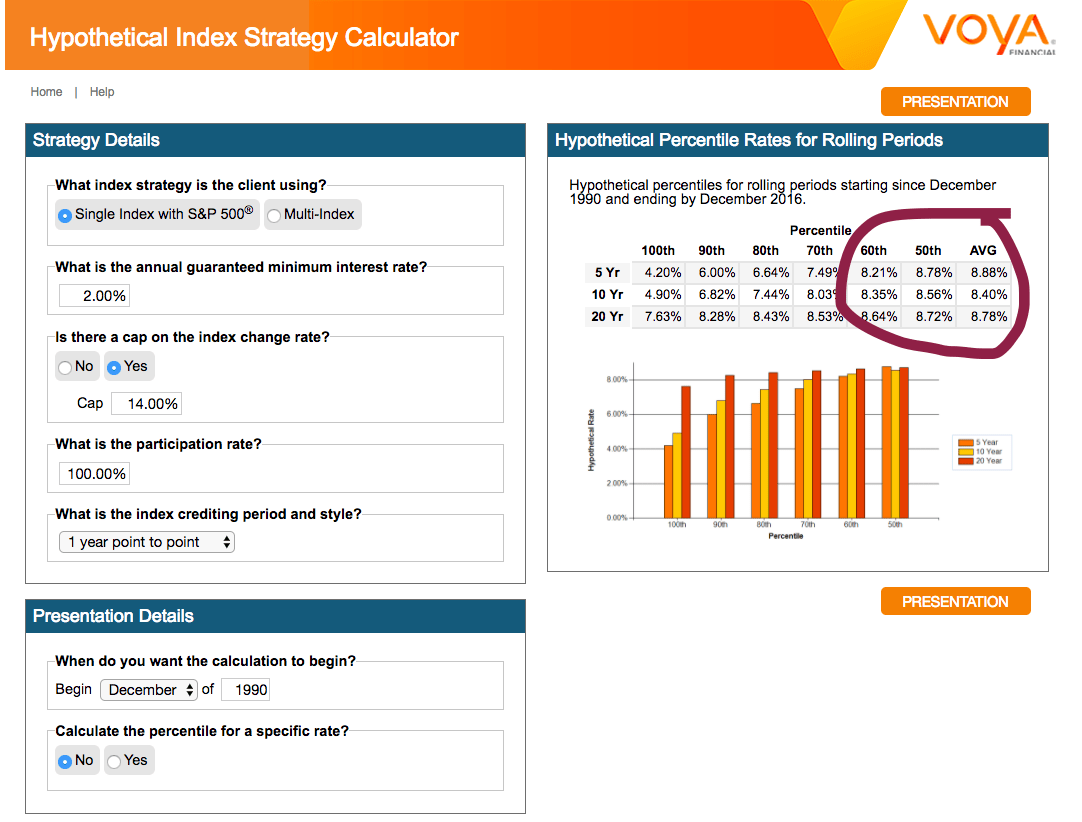
Illustrated rates on new policies are capped by actuarial guideline 49-B. A flat 6% every year on the sales ledger is a regulatory maximum built from today’s caps, not a forecast. The comparison page shows what capped credits looked like on real index years.
Before you open one
Decide which job the policy has. Income replacement for a family is a different design from cash value you plan to borrow later. Both can fail if the premium is set to the minimum and the cap is cut.
Have these from any proposal before you apply:
- Guaranteed maximum charges, not only current charges
- Current cap, floor, and participation, and whether they are guaranteed
- A lapse illustration if you pay the planned premium and credited interest comes in lower
- Loan rate if you expect to borrow
If you want a contractual cash-value schedule and a level premium, whole life is the simpler contract. Get a whole life quote and only then decide whether the IUL flexibility is worth the moving parts.
Steps to apply
- Set the premium you will actually pay. Flexible premiums are a feature until a skipped year has to be made up at an older age, when cost of insurance is higher.
- Compare two carriers on the same face amount. Ask each for current cap, floor, participation, and the guaranteed charge table. A higher illustrated rate with a weaker guarantee is not the better policy.
- Read the application’s health questions yourself. The insurer prices the cost of insurance from those answers. An agent summary is not the contract.
- Fund it, then check the annual statement. Look at credited interest, charges, and surrender value. If charges exceed what was illustrated in the first few years, ask why before you borrow.
Get a whole life quote if you want the guaranteed design quoted next to any IUL you are considering. A short product definition is on what indexed universal life is.