How to Maximize Whole Life Cash Value

This page is about funding mechanics after you already have (or are designing) a participating whole life policy. It is not a carrier ranking and it is not a “whole life vs IUL” explainer.
- Still choosing a company → top whole life companies for cash value
- Still choosing the chassis (whole life vs IUL vs GUL) → which policy type builds cash value
- Ready to design the premium → stay here
Cash value does not “maximize” because you picked a high dividend rate this year. It grows because premium is structured so more of each dollar buys paid-up additions, the contract stays in force, and loans do not eat the death benefit you actually need.
What actually moves cash value
Four levers matter more than the marketing illustration:
- Base vs PUA split — the base premium buys the guaranteed contract. Paid-up additions (PUAs) buy extra paid-up whole life that adds both death benefit and cash value, usually without new underwriting.
- Overfunding without a MEC — paying more than the target premium accelerates cash value. Crossing the IRS 7-pay / MEC line makes the policy a modified endowment contract. Gains on loans and withdrawals then get taxed like an annuity. Design to the MEC line, not through it.
- Dividend option — on participating whole life, “paid-up additions” is usually the option that compounds. Taking dividends in cash or to reduce premium slows the cash-value engine.
- Loan discipline — a policy loan is useful. An unpaid loan plus interest on a thinly funded policy is how cash value stalls.
If the illustration looks exciting in year 20 and the outlay is the minimum premium, you are not maximizing cash value. You are maximizing a sales document.
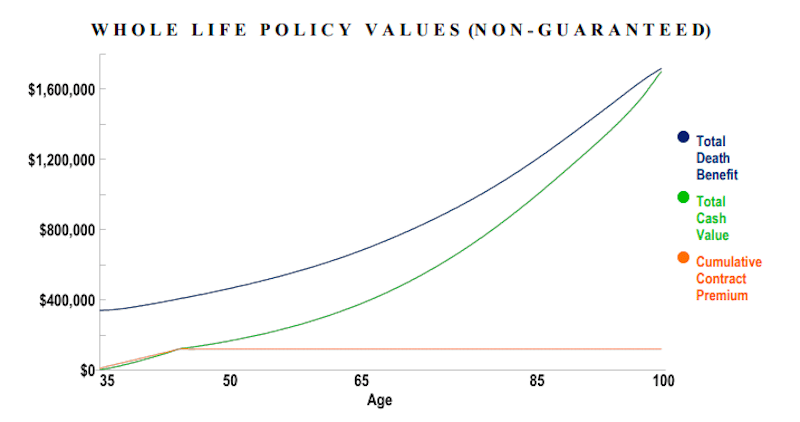
Whole life insurance cash value chart (hypothetical example)
This is a HYPOTHETICAL illustration, not a quote and not any insurer's product. Real illustrations vary by insurer, age, health, policy design, and dividends, which are not guaranteed. We show it to make the shape of cash value growth easy to see.
Assumptions: $5,000 annual premium paid every year. The share of each premium that reaches cash value is 20% in year 1, 60% in year 2, 80% in years 3–5, and 95% from year 6 on (the rest covers insurance costs and early-year expenses). Cash value then grows at a flat net rate of 2% in the lower-growth scenario and 4.5% in the higher-growth scenario. Values are rounded to the nearest $100.
| Year | Premiums paid | Cash value @2% | Cash value @4.5% |
|---|---|---|---|
| 1 | $5,000 | $1,000 | $1,000 |
| 2 | $10,000 | $4,100 | $4,200 |
| 5 | $25,000 | $16,800 | $17,900 |
| 10 | $50,000 | $43,800 | $49,500 |
| 15 | $75,000 | $73,600 | $88,900 |
| 20 | $100,000 | $106,400 | $137,900 |
| 30 | $150,000 | $182,800 | $275,100 |
How to read a real cash value chart:
- Early years are thin. In most whole life illustrations, the surrender value in the first few years is well below the premiums paid, because early premiums cover commissions, underwriting, and insurance costs.
- Look for the guaranteed column first. A real illustration shows guaranteed values and non-guaranteed (dividend-based) values side by side. Plan on the guaranteed column; treat the other as a scenario.
- Paid-up additions change the curve. Directing extra premium into paid-up additions (below) pushes cash value up earlier than base-only funding.
Want your own numbers? Ask for an in-force or sales illustration, or get a whole life quote.
Paid-up additions (the main lever)
PUAs let you dump extra premium into the same contract. That extra premium buys small chunks of paid-up whole life:
- Cash value is higher, earlier, than base-only funding.
- Death benefit steps up with each addition.
- No new medical exam on the PUA rider (the original underwriting still applies).
Ask the illustration for two columns: minimum (keep the policy in force) vs target / dump-in (PUA to the MEC line). The dump-in column is the one that matches “maximize cash value.” The minimum column is insurance with a savings side-effect.
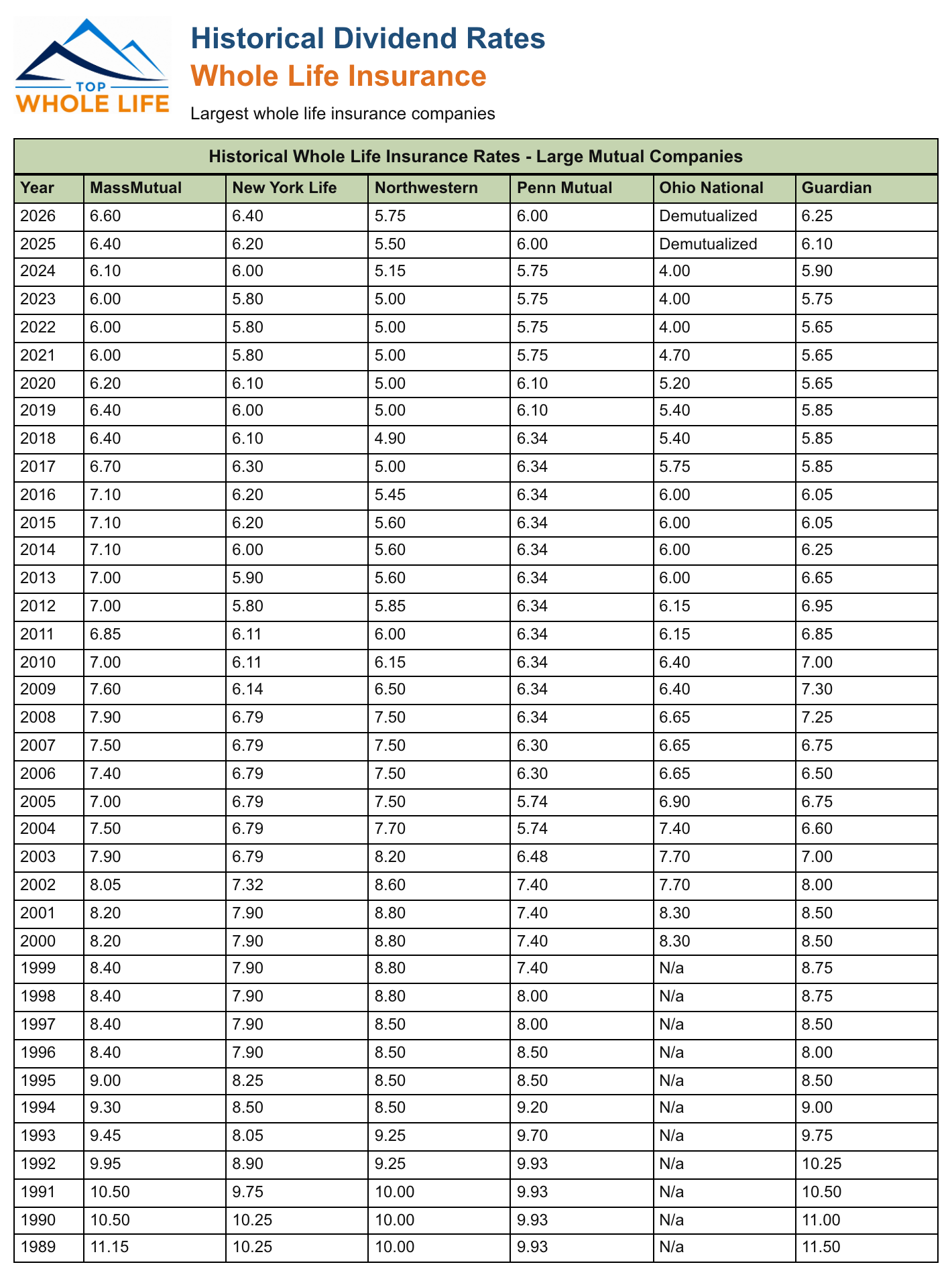
Direct vs non-direct recognition also matters once you take a loan. Some carriers reduce the dividend on the borrowed portion; others do not. That is a carrier question — see the cash-value company list — not a generic “overfund more” tip.
Overfund without blowing a MEC
Overfunding means paying more than the required premium so more dollars hit cash value. It is not the same as “pay whatever the agent typed.”
Before you increase outlay:
- Confirm the 7-pay premium and remaining room this year.
- Confirm whether 1035 money, lump sums, or a 1035-from-an-annuity counts toward the MEC test.
- Recalculate after a face-amount change. Cutting death benefit to “free up” cash can create a MEC if the IRS tests are not re-run.
If you need a large dump-in and the current face amount cannot absorb it, the clean fix is often a higher face amount (or a second policy), not a MEC. Call us at (209) 867-5433 with the in-force illustration before you wire extra premium.
Dividend option: keep it on paid-up additions
Participating policies can pay a dividend. The dividend is not guaranteed and it is not your policy’s rate of return. It is an input. How you apply it is a choice:
| Option | What it does to cash value |
|---|---|
| Paid-up additions | Compounds: extra paid-up insurance + cash value |
| Reduce premium | Lowers out-of-pocket; slows cash value |
| Cash | Spendable; stops compounding inside the policy |
| Accumulate at interest | Sits in a side account; usually weaker than PUAs |
If the goal on this page is maximize cash value, use PUAs unless you have a specific reason not to (cash-flow crunch, a planned reduction in force). Dividend history by carrier lives on our dividend rate history table.
Policy loans: use them, do not live in them
Loans against cash value skip a credit check and usually have no required repayment schedule. That is the feature. The cost is interest and, if unpaid, a smaller net death benefit.
Rules I actually use:
- Borrow after the policy has real cash value, not in year two to “get your money back.”
- Know whether the carrier is direct recognition (dividend on the borrowed block can drop) before you size the loan.
- If the loan is a bridge, calendar a repayment. If it is a retirement income design, the illustration must show a sustainable income, not a vanishing premium that blows up at 85.
For the “should I even own cash-value life insurance?” question, read the pros and cons. This page assumes you already decided yes.
A simple funding checklist
- Pick participating whole life at a mutual you would keep for 20+ years (carrier list).
- Set death benefit from the need, then fund PUAs to the MEC line if cash value is the job.
- Lock the dividend option on paid-up additions.
- Pay on time. A lapse wipes the design.
- Review loans and the in-force illustration every year — not every time a blog tells you to “overfund.”
Want a quote built this way instead of a minimum-premium illustration? Get a whole life quote.